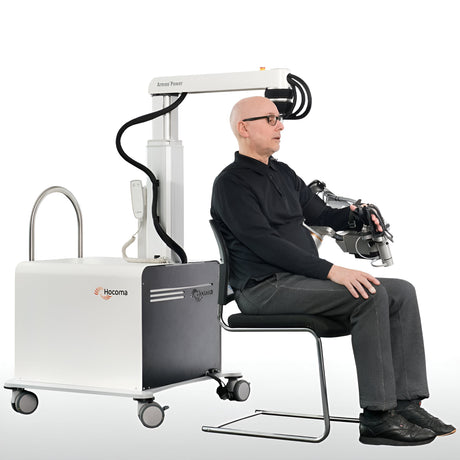
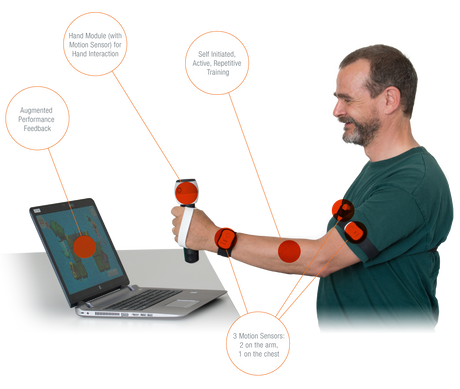
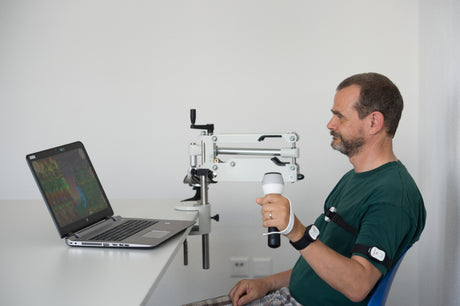
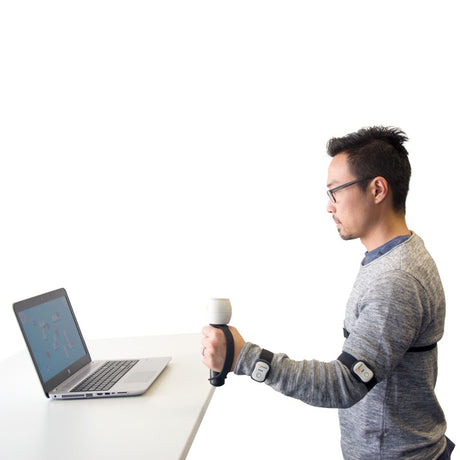
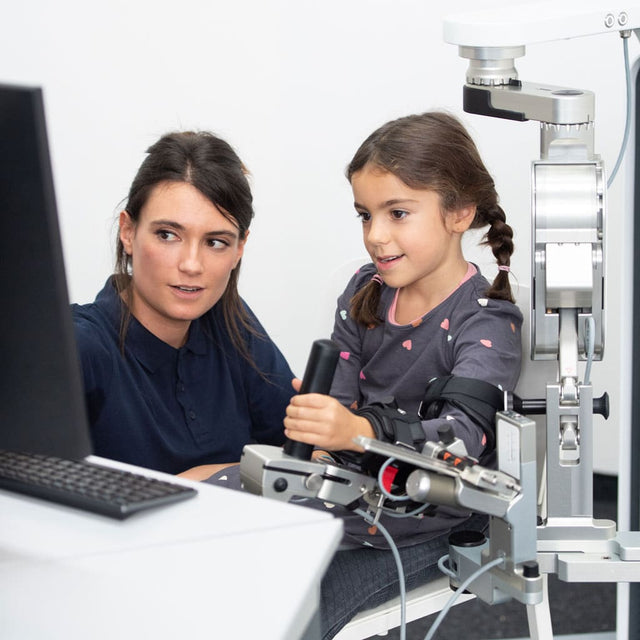
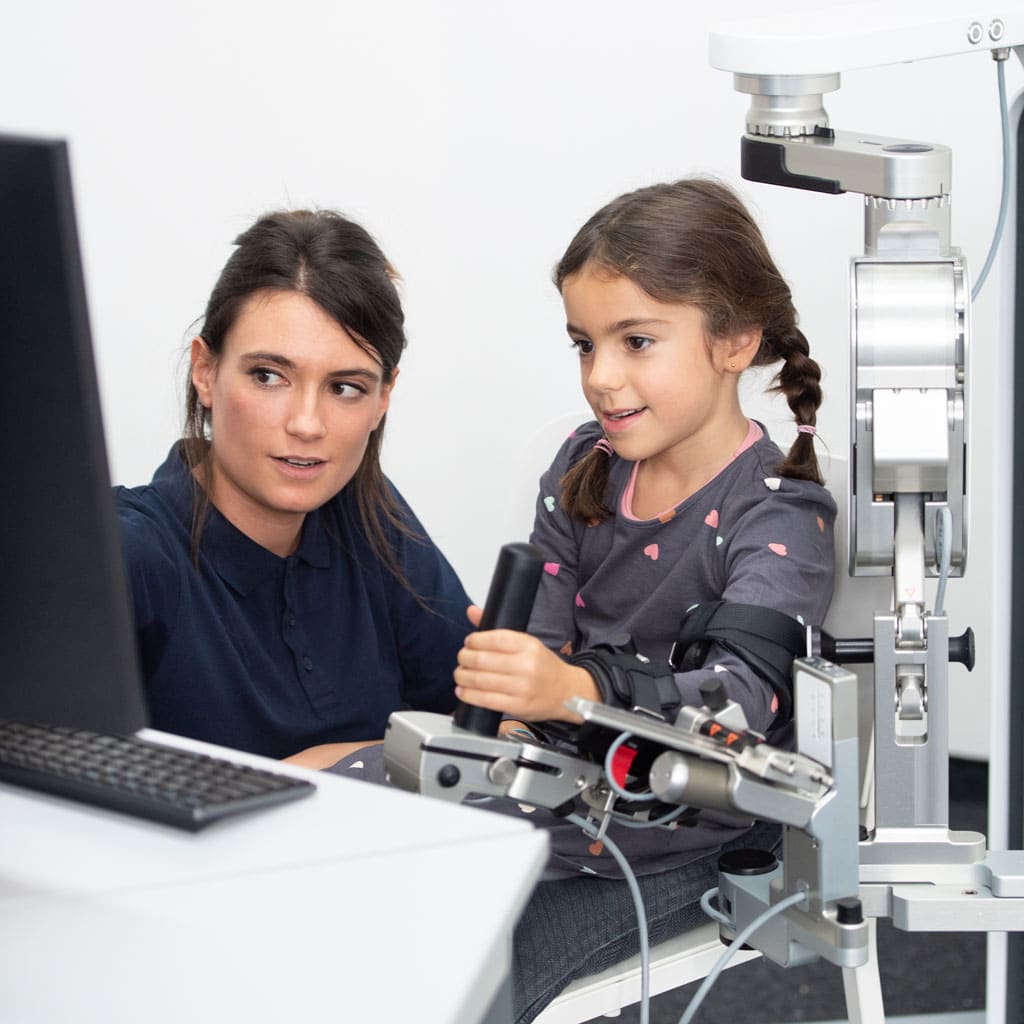
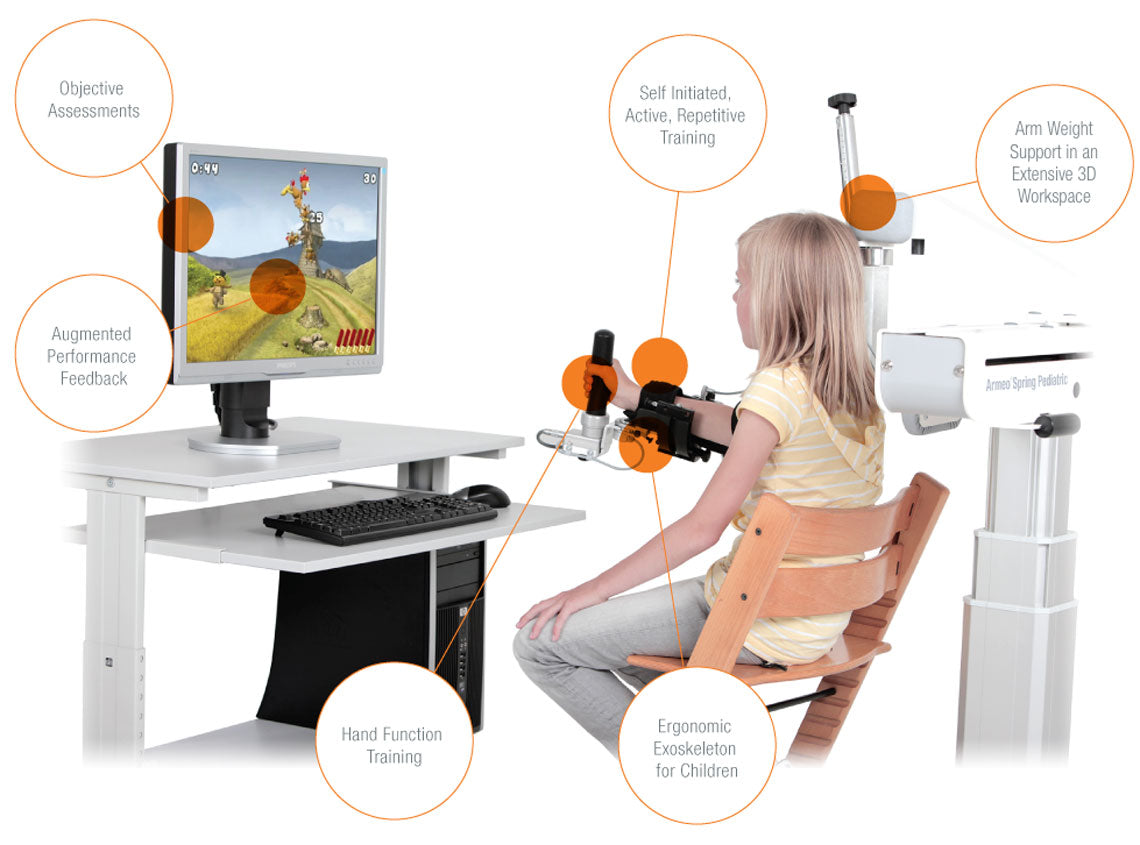
The Hocoma ArmeoSpring Pediatric is a specialised version of the ArmeoSpring, designed to meet the unique needs of children undergoing upper limb rehabilitation. Tailored for smaller anatomies, it offers adjustable arm weight support within a large 3D workspace, empowering young patients with mild to moderate motor impairments to perform self-initiated, functional movements during therapy.
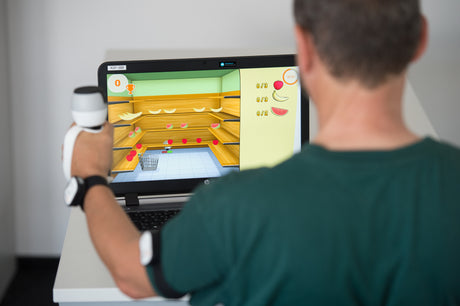
Using a spring-based mechanism, the device reduces the effort required to lift the arm, enabling children to engage in longer, more effective sessions. The immersive, game-like therapy environment is designed to capture attention and maintain motivation, while real-time visual feedback encourages active participation and continuous improvement. Clinicians can monitor performance through integrated assessment tools and adapt therapy to suit each child’s evolving needs.
Part of the broader Armeo Therapy Concept, the ArmeoSpring Pediatric supports continuity in care, guiding young patients from early movement initiation to more advanced coordination and control. It’s an ideal solution for paediatric rehabilitation settings seeking a fun, effective, and evidence-based approach to upper limb recovery.
Core Features
Child-Specific Design
Customised for paediatric users with appropriate sizing, adjustability, and comfort for growing bodies.
Spring-Based Arm Weight Support
Offloads the weight of the arm to reduce fatigue and support high-repetition training critical to neuroplastic recovery.
3D Functional Movement Workspace
Allows for natural, multi-directional arm movements to improve range of motion, strength, and control.
Engaging, Gamified Exercises
Motivates children through interactive therapy games that promote motor learning and sustained focus.
Performance Tracking and Assessments
Captures real-time data to help clinicians personalise treatment plans and document progress.
Who It’s For
Designed for paediatric rehabilitation clinics treating children with neurological or musculoskeletal conditions—such as cerebral palsy, acquired brain injury, or brachial plexus injury—who have some active movement but require support and motivation to improve functional use of the upper limbs.



 Open here